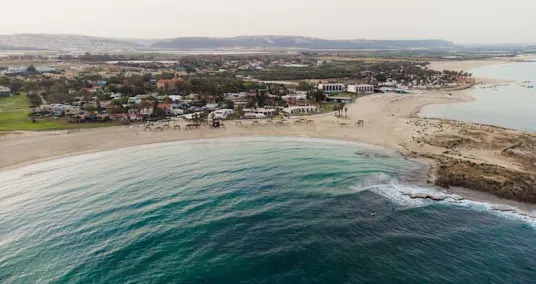
The discovery was made in an ancient shipwreck in the Dor Lagoon near the Carmel Coast, where archaeologists recovered nine pieces of unprocessed iron known as “blooms.”
Researchers from the University of Haifa said Wednesday that an underwater excavation off Israel’s northern Mediterranean coast uncovered what they described as the earliest known cargo of raw iron transported by ship, dating back around 2,600 years, Xinhua reported.
The discovery was made in an ancient shipwreck in the Dor Lagoon near the Carmel Coast, where archaeologists recovered nine pieces of unprocessed iron known as “blooms.” According to the university, the find provides direct evidence of how iron was transported in its earliest commercial stages.
The material was preserved in its original form, having solidified directly in a smelting furnace without undergoing forging or further refinement. Researchers said this distinguishes the cargo from later iron artifacts that typically show signs of shaping or tool-making.
Unlike copper and bronze, which could be melted into liquid form in ancient production processes, iron was heated with charcoal to produce a solid, porous mass. That mass was generally hammered to remove impurities and create denser material suitable for tools and implements.
The recovered blooms showed no indication of that secondary processing stage, suggesting they were transported immediately after production.

Earliest iron shipment discovered in ancient Mediterranean wreck
To determine the age and condition of the cargo, researchers conducted microscopic and chemical analyses.
Radiocarbon dating was also carried out on charred wood embedded in one of the pieces, helping confirm the timeline of the shipment. The findings were published in the journal Heritage Science.
Researchers said the cargo indicates that iron was being moved in raw form from production sites to other locations for further processing, pointing to a level of specialization in ancient manufacturing and trade networks in the Mediterranean.
The University of Haifa said the discovery provides new insight into early iron production and distribution practices in the region.
LATEST POSTS
- 1
 'Hero' who wrestled gun from Bondi shooter named as Ahmed al Ahmed
 - 2Get To Be familiar with The Historical backdrop Of Western Medication
- 3Outside Lovers' Decision: Favored Climbing Rucksacks
- 4Yoshi mania, Happy Meals and not-so-great reviews: A small talk guide to 'The Super Mario Galaxy Movie'
- 5Wedding Guest Outraged That Bride and Groom, Who Are in Their 60s and Have Both Been Married Before, Registered for Gifts




- Extraordinary Guinness World Records That Will Astound You
- Saturn's moon Titan may not have a buried ocean as long suspected, new study suggests
- Ariana Grande to host 'Saturday Night Live' Christmas show with Cher as musical guest, returning after nearly 40 years
- New science points to 4 distinct types of autism
- Stolen Renoir, Cézanne and Matisse were probably uninsured, market sources say
- Manual for 6 famous sorts of cheddar
- 5 Food varieties to Remember for Your Eating regimen for Ideal Wellbeing
- Whale stranded in the Baltic Sea swims free again. It still faces a tough task
- Why More Couples Are Choosing Africa For Their Honeymoon