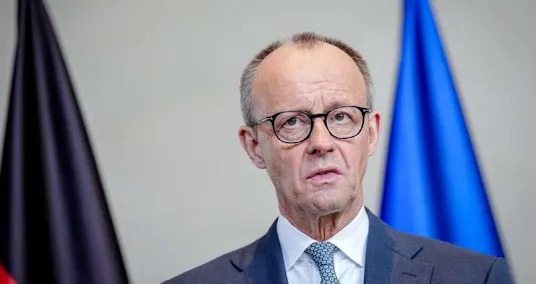
German Chancellor Friedrich Merz has said that 80% of the more than 900,000 Syrian nationals in Germany should return to their home country in the next three years.
At a press conference with Syria's interim President Ahmed al-Sharaa in Berlin on Monday, Merz said the leaders agreed that over the "longer term of the next three years," around "80% of the Syrians currently in Germany should return to their homeland."
"That was also the wish of President Sharaa," Merz said, adding that "those Syrians who wish to remain in Germany and are well integrated will be able to stay in Germany."
Germany was one of the main destinations for Syrian refugees fleeing the devastating civil war, with around 1 million arriving in the country during dictator Bashar al-Assad's time in power.
Calls for Syrian nationals to leave Germany have risen in conservative and far-right circles following al-Assad's ousting in late 2024 by an Islamist coalition led by al-Sharaa.
LATEST POSTS
- 1
 Supreme Court case about ‘crisis pregnancy centers’ highlights debate over truthful advertising standards
 - 2Analysis-NASA's moon mission tests aerospace old guard as SpaceX, Blue Origin hover
- 3Lockheed Martin opens new hypersonic weapons facility
- 4Evidence of lost baptismal rite stage uncovered in Byzantine era cathedral near Sea of Galilee
- 5NASA’s history-making moon mission aims to send the first woman and person of color to deep space





- Who plays Moana in the live-action remake? What to know about Catherine Lagaʻaia.
- 'Euphoria' releases Season 3 photos with Zendaya, Sydney Sweeney, Jacob Elordi and others: See them
- Finding China: Four Urban areas for a Remarkable Excursion
- Commonsense Ways to work on Your Funds with a Restricted Pay
- Find Your Ideal Tea: Six Particular Assortments
- Flu surges across U.S. as doctor visits reach highest level since 1997
- Navy-Marine Corps Relief Society provides emergency grants to families displaced by Iran war
- Shredded cheese recall: Multiple brands sold at Aldi, Target and Walmart affected over potential metal fragment contamination
- Gen Z workplace stereotypes were TV’s favorite punchline in 2025


